Every tested canning recipe I trust, in one place.
243 recipes for fruit, jams, jellies, tomatoes, vegetables, meat and pickles, with safe times and pressures for your altitude. All of them from the USDA and the National Center for Home Food Preservation.
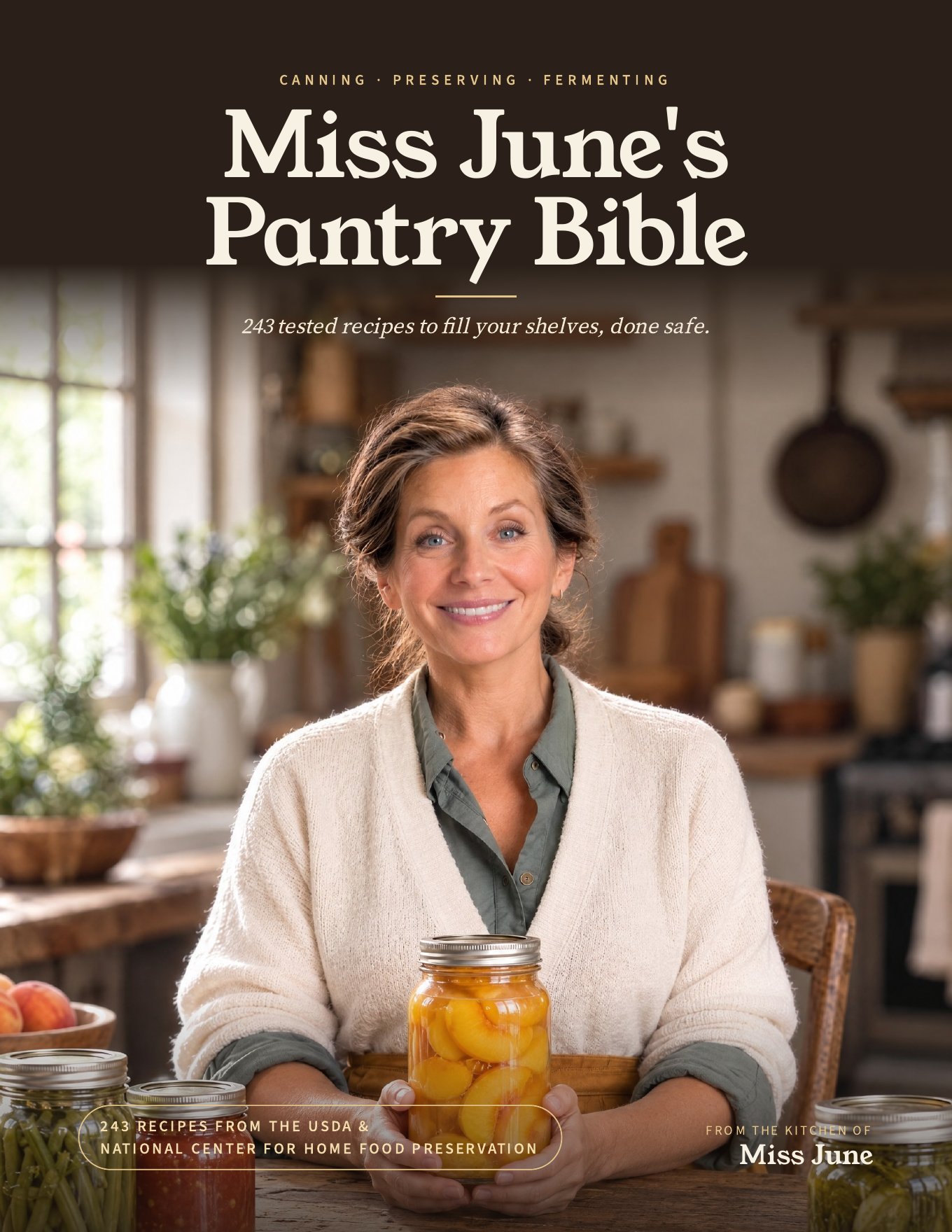
A jar can look perfect and still make somebody sick.
Botulism doesn't change how a jar looks, smells or tastes. The only thing that stops it is the right heat for the right amount of time, and that's exactly what a tested recipe gives you: processing times worked out in a lab, for your jar size and your altitude.
Grandma's recipe card can't promise that. This book can, because every time, pressure and ingredient amount in it comes from published food-safety research, with the source printed right on the page.
"I'll give you my stories and my little tricks, but I'll never change a time, a vinegar amount or a jar size on you. Those numbers are what keep your family safe."
Seven chapters. A full pantry.
Every recipe gets two pages: a full-page photo, then the whole recipe with what you need, step-by-step directions, a processing table for every altitude, a safety check, and a cost-per-jar estimate.
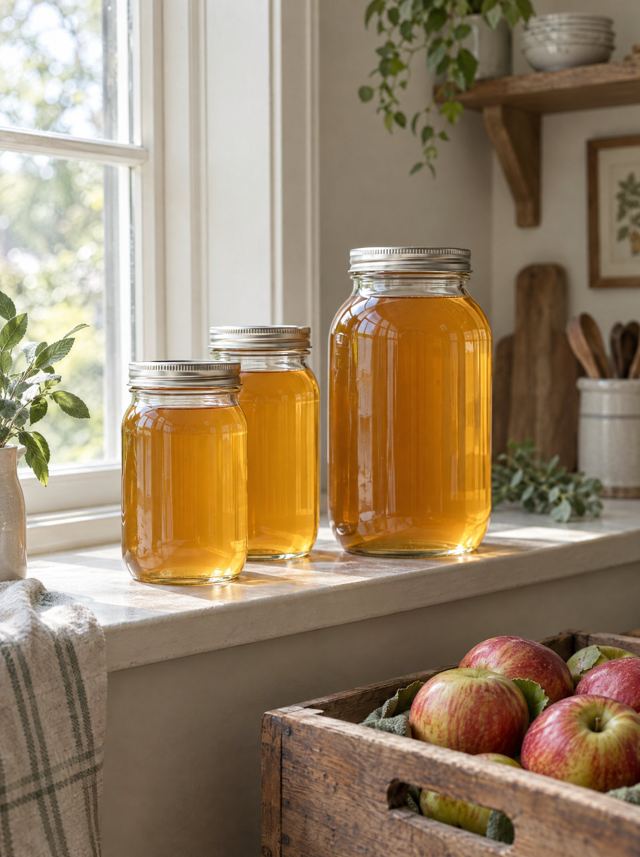
Fruit & Pie Fillings
39 recipes
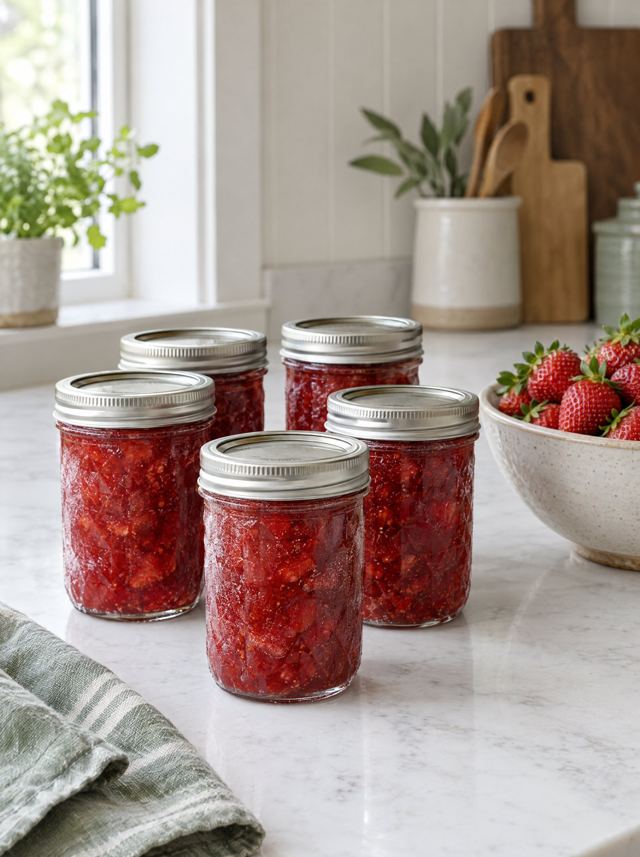
Jams, Conserves & Preserves
32 recipes
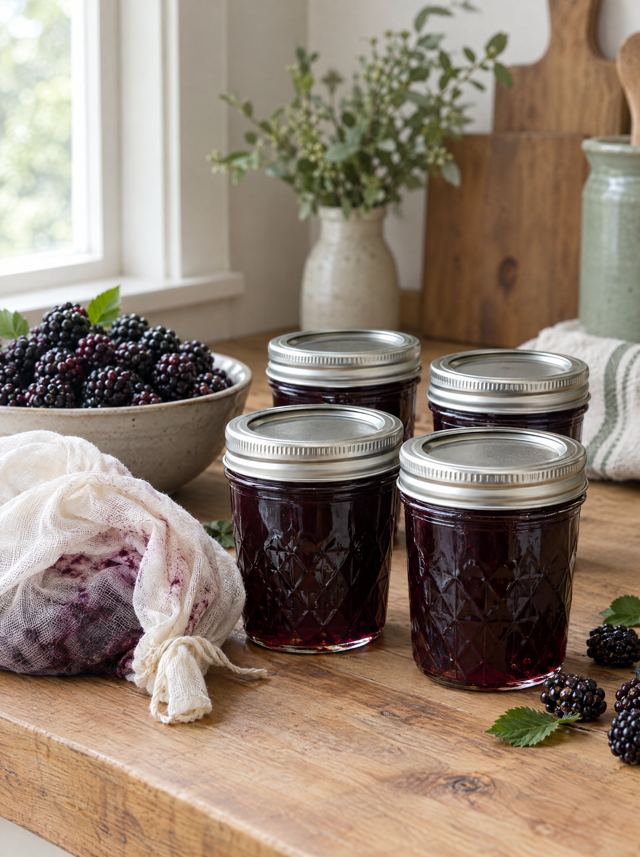
Jellies, Marmalades & Spreads
42 recipes
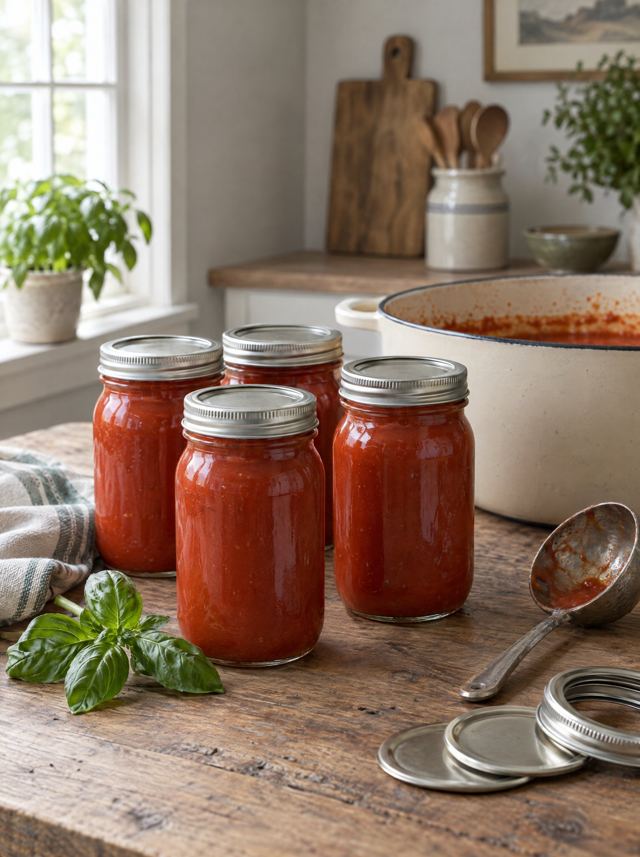
Tomatoes & Salsas
30 recipes
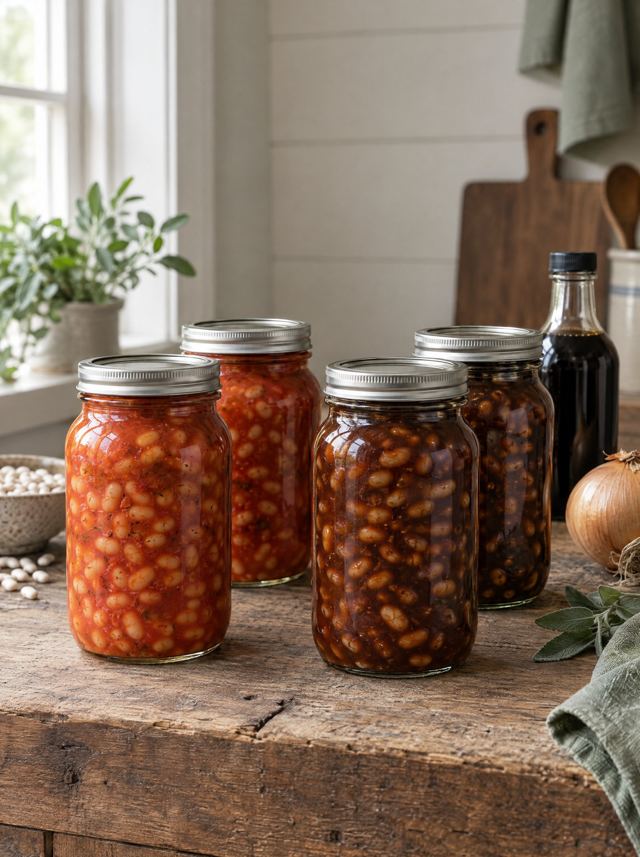
Vegetables
21 recipes
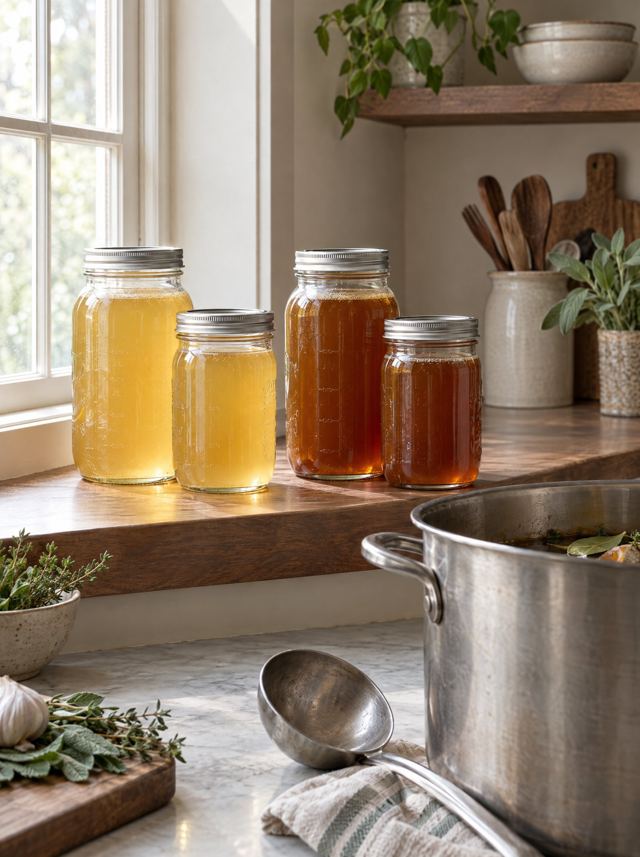
Meat, Stock & Seafood
14 recipes
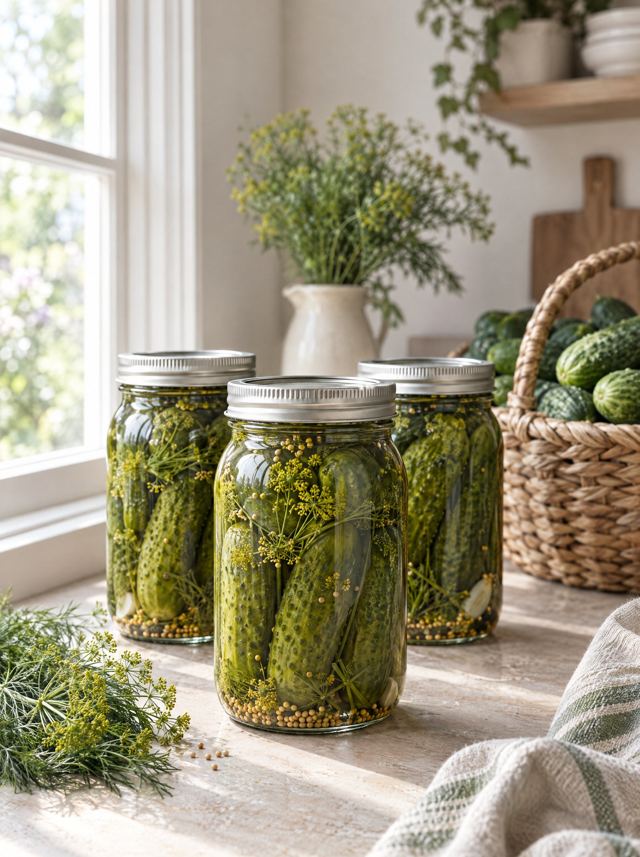
Pickles, Relishes & Chutneys
65 recipes
Plus the know-how
- Canning 101, step by step
- Canning at altitude
- Jam, jelly & pickling basics
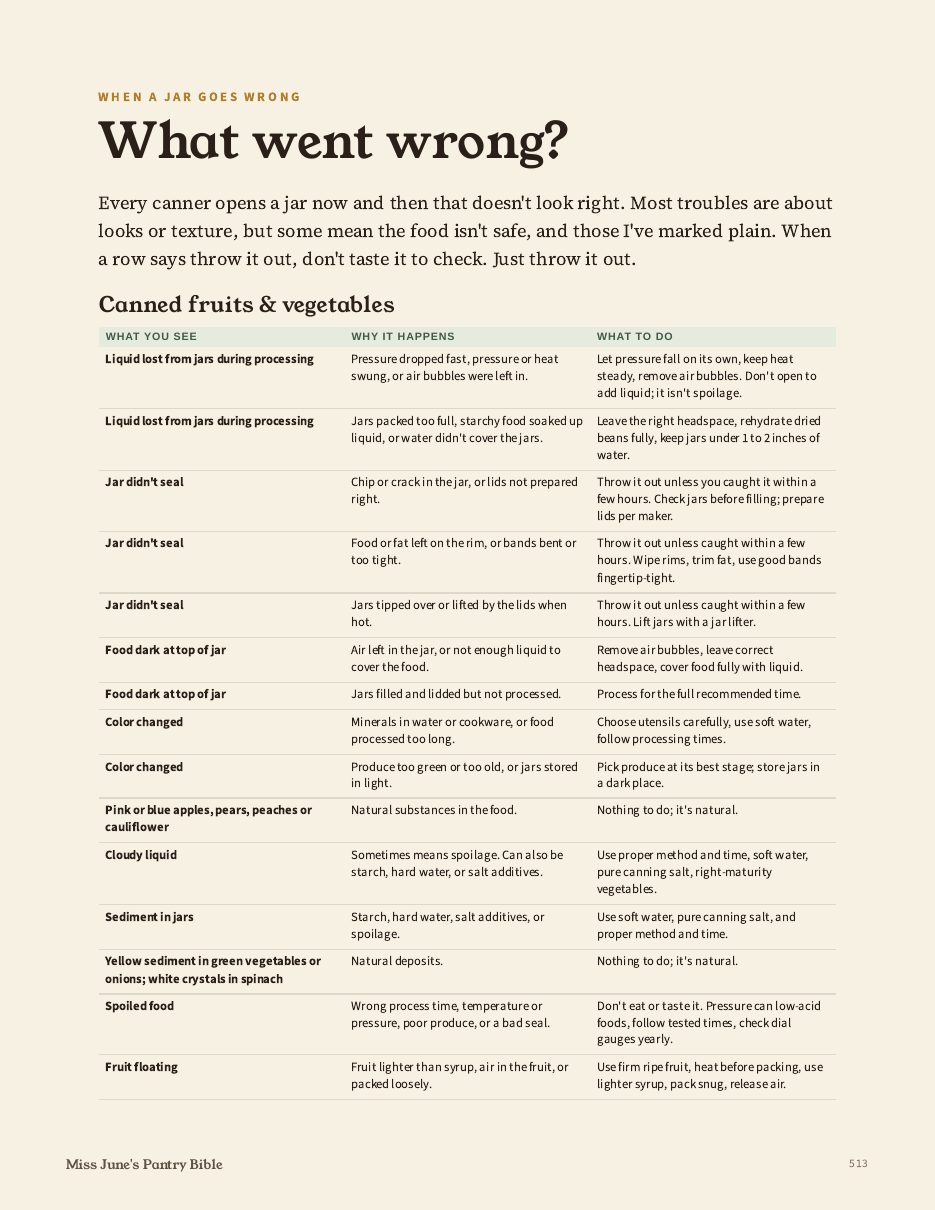
- What went wrong? troubleshooting
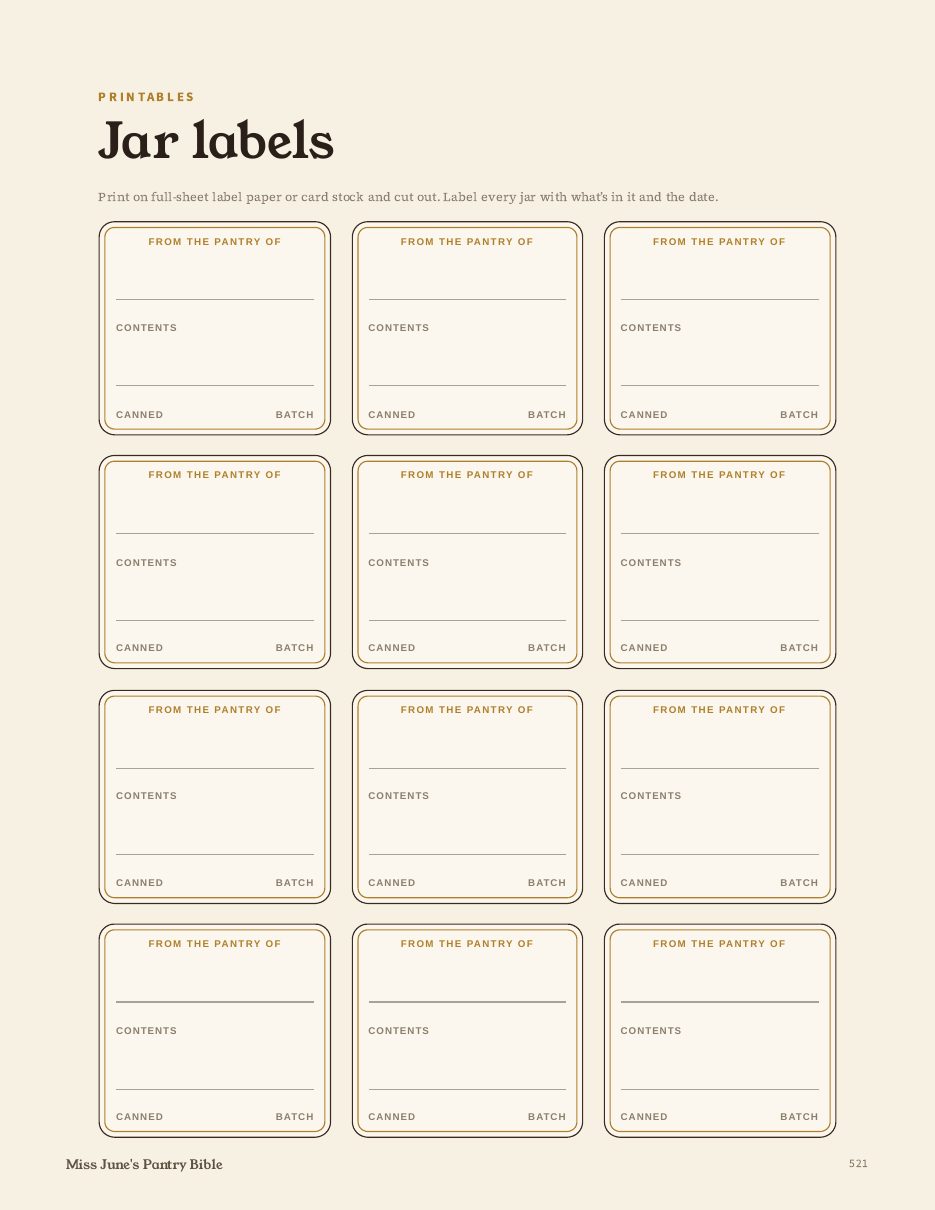
- Printable log, inventory, labels & checklist
Made to be read at the counter.
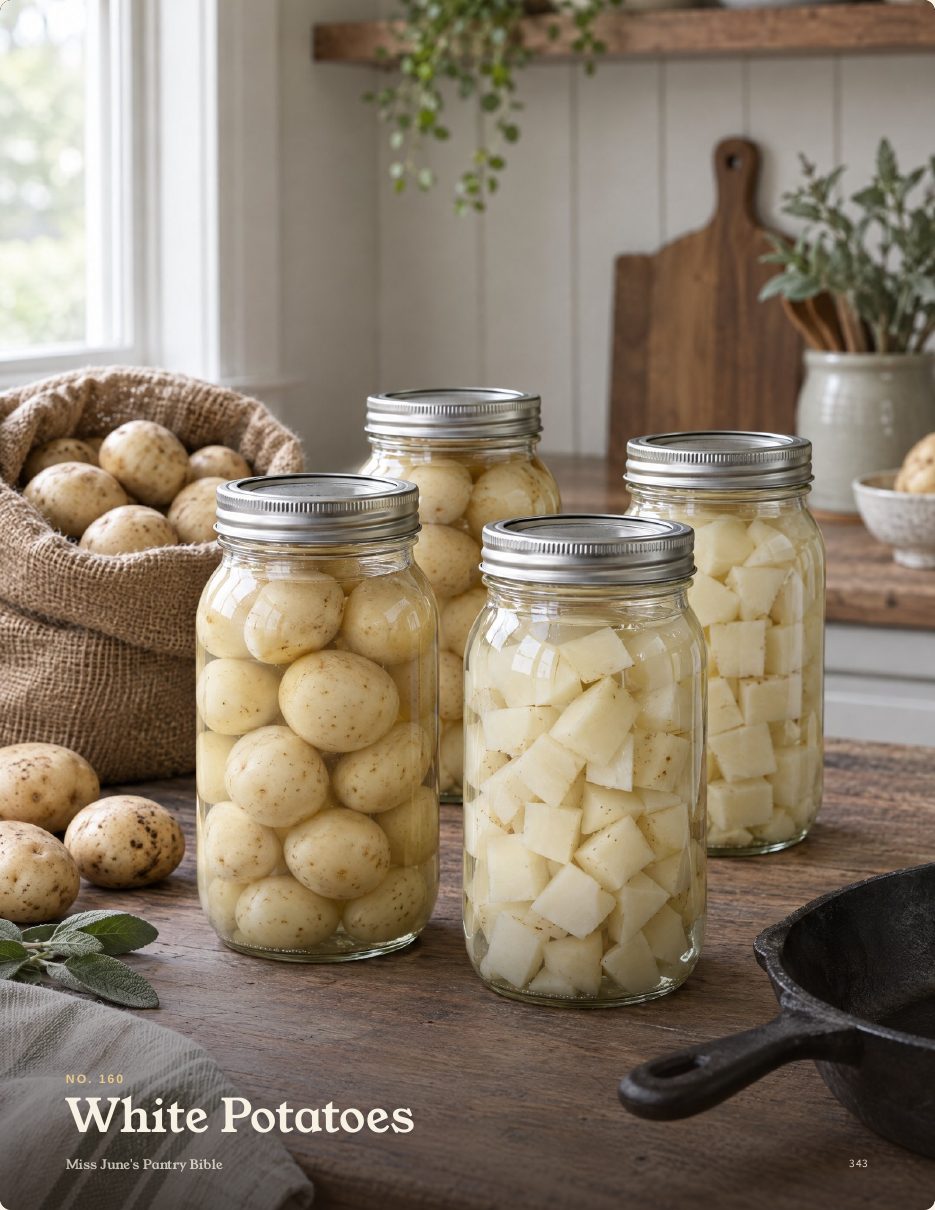
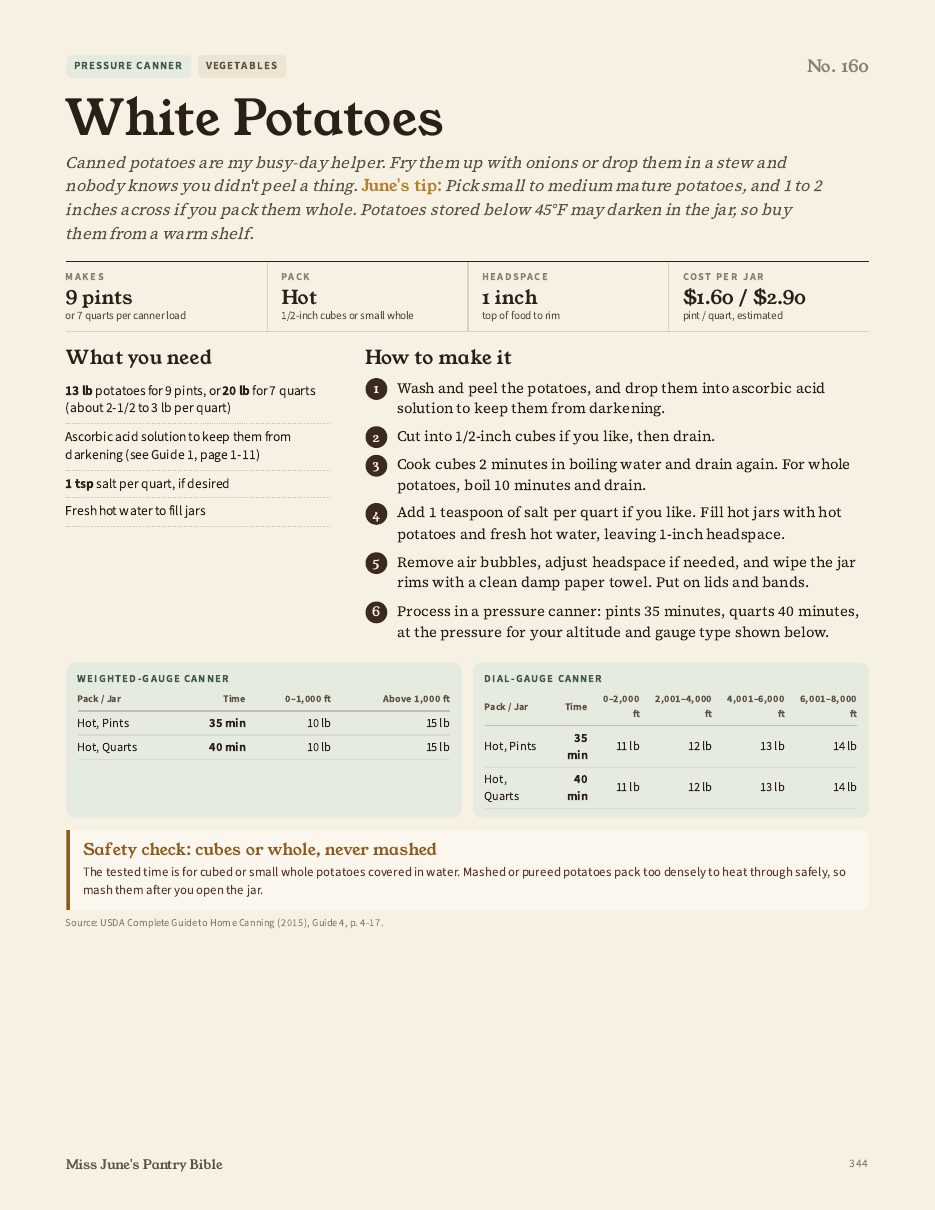
A real spread from the book: White Potatoes, pressure canner, with both weighted- and dial-gauge tables.
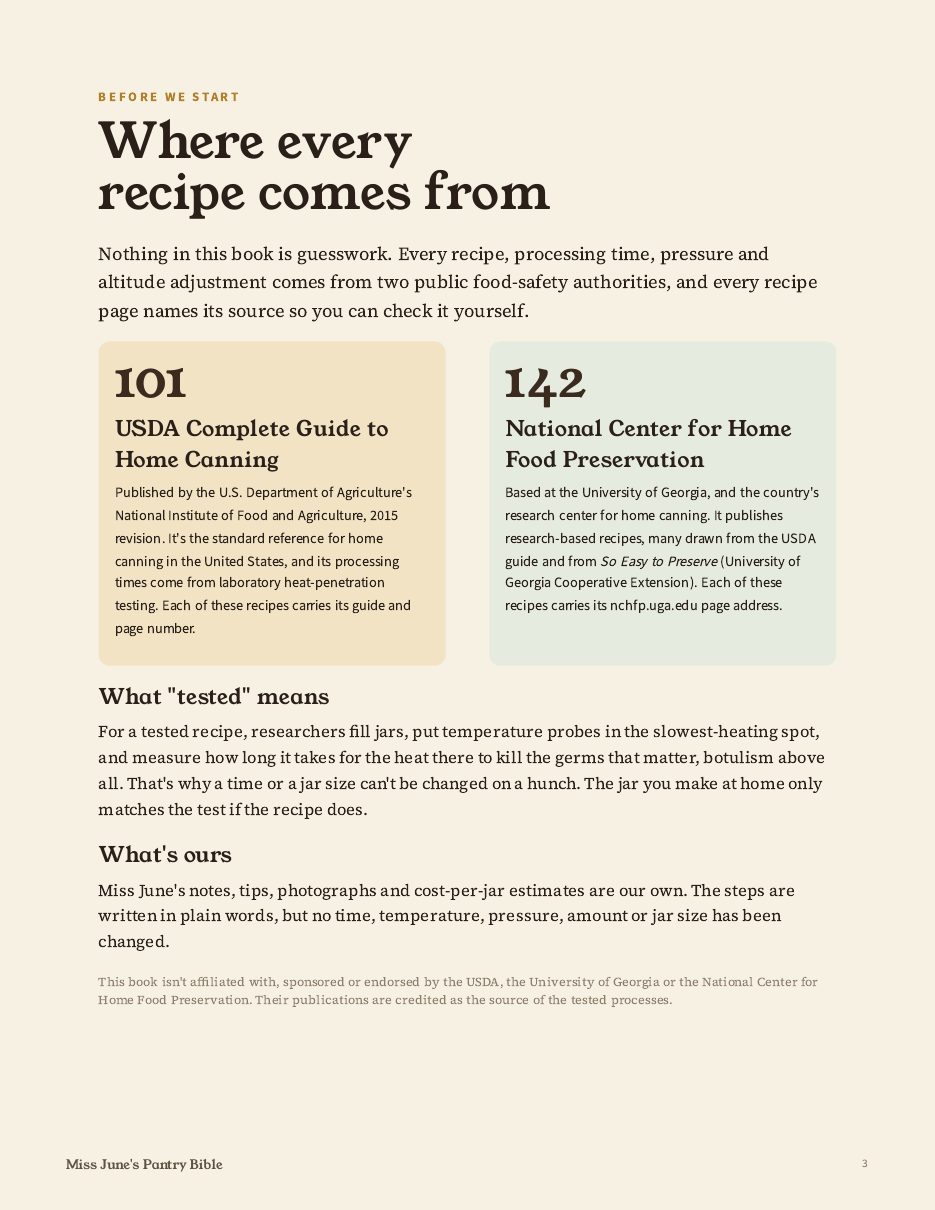
Where every recipe comes from.
Nothing in this book is guesswork. Every processing time, pressure, altitude adjustment and ingredient amount comes from one of two public food-safety authorities, and each recipe names its source so you can check it yourself.
USDA Complete Guide to Home Canning
The U.S. Department of Agriculture's standard home-canning reference (2015 revision), with processing times from laboratory heat-penetration testing. Each of these recipes carries its guide and page number.
National Center for Home Food Preservation
The University of Georgia's research center for home canning, which publishes research-based recipes, many drawn from the USDA guide and the university's So Easy to Preserve. Each of these recipes carries its nchfp.uga.edu page address.
Miss June's notes, tips, photographs and cost estimates are our own; the tested processes are credited to their sources. This book isn't affiliated with, sponsored or endorsed by the USDA, the University of Georgia or the National Center for Home Food Preservation.

There's a particular kind of quiet that comes over a kitchen once the last jar is out of the canner. You hear the lids start to ping, one after another, and you know every one of those jars is a supper you won't have to worry about come February.
I made this book because I got tired of watching good people follow recipes that were never tested. The folks who wrote these recipes did the hard part in a lab. I just put them all in one place, wrote them the way I'd explain them across my own kitchen table, and made them pretty enough to leave out on the counter.
Read the recipe through once. Check your altitude. And if a jar ever looks wrong, throw it out without tasting it.
Miss June is the AI-generated host of Miss June's Pantry on YouTube. The recipes and safety guidance in the book are real, tested and sourced.
Miss June's Pantry Bible
- 243 tested recipes across 7 chapters
- 524 full-color pages, every recipe with its own photo
- Processing tables for every altitude, weighted and dial gauges
- The source printed on every recipe, USDA or NCHFP
- Canning 101, jam and pickling basics, and troubleshooting
- Printable canning log, pantry inventory, jar labels and checklist
PDF for phone, tablet, computer or print
Secure checkout. Your download link arrives by email right after purchase.
Good to know.
Is this a printed book?
No, it's a digital PDF you download right after checkout. It reads well on a phone or tablet, and you can print any page, like the recipe you're making that day or the printable labels and log sheets.
I'm brand new to canning. Is this for me?
Yes. The Canning 101 section walks you through both canners step by step, how to read the altitude tables, and how to check seals and store jars. Every recipe tells you which canner to use.
Do the recipes work at high altitude?
Yes. Every canned recipe includes its processing time or pressure for each altitude band its source gives, and there's a page on finding your elevation.
Where do the recipes come from?
101 come from the USDA Complete Guide to Home Canning (2015) and 142 from the National Center for Home Food Preservation at the University of Georgia. The source is printed on each recipe page.
Do I need a pressure canner?
For vegetables, beans, meat, stock and seafood, yes: those low-acid foods are only safe in a pressure canner. Fruit, jams, jellies, pickles and acidified tomatoes use a water-bath canner.
Is Miss June a real person?
Miss June is the AI-generated host of our YouTube channel. The recipes, times and safety guidance in the book are real and come from the sources above.
What if I have a problem with my order?
Email us and we'll sort it out.
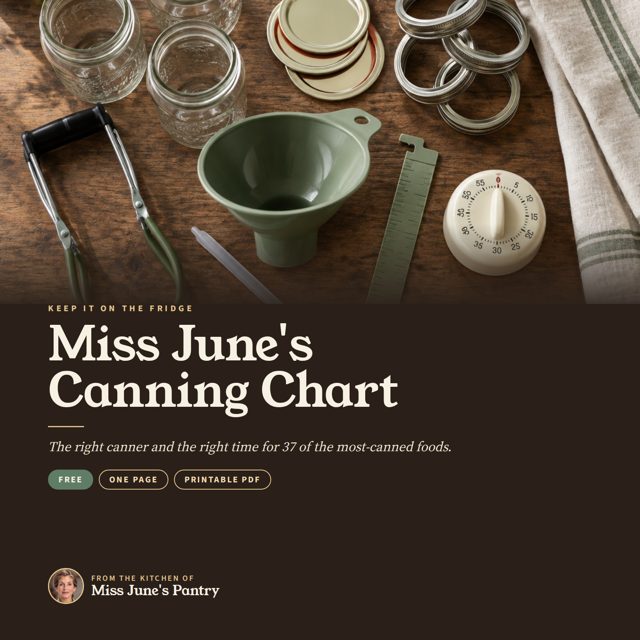
Grab my free one-page canning chart.
Safe times for 37 common foods, the foods you should never water-bath, and altitude at a glance. Free when you join Miss June's email list.
Send me the chartNo spam. Unsubscribe any time. Privacy